





Blog
Quad Cities Chamber Blog
QC, That's Where the Quad Cities Chamber and area businesses in our family of communities are advancing regional prosperity and advocating for economic growth along the Mississippi River.
Want to stay informed? Here's how.
Weekly Economic Trends and Indicators
July 14, 2026
International trade flows have stabilized now that the new tariffs have been in effect for several months. Both imports and exports have increased. This week, we look at how the composition of trade has shifted in the year since the tariffs and identify an important factor that could determine where things go from here.
Weekly Economic Trends and Indicators
July 9, 2026
U.S. job growth in June failed to meet expectations, but the unemployment rate edged slightly lower as labor force participation fell. This week, we examine the industries with the most job gains and losses and put this report into the context of upcoming monetary policy decisions.
Weekly Economic Trends and Indicators
July 2, 2026
Construction continues to be the hottest category in the local job market, adding another 300 jobs in May. Seasonal factors were the big employment driver across the local economy. This week, we identify the sectors that changed the most and discuss how employment demographics are contributing to long-term trends.
Weekly Economic Trends and Indicators
June 25, 2026
U.S. inflation numbers came in a little higher than expected in May. This week, we look at the sectors where inflation is the hottest and investigate whether recent developments could bring relief in June's data.

Weekly Economic Trends and Indicators
June 18, 2026
There were two significant news events in the economic world recently with the potential to affect the outlook for the second half of the year. This week, we discuss how a new Federal Reserve Chair and a drop in oil prices could impact inflation and growth in the months ahead.

Weekly Economic Trends and Indicators
June 11, 2026
U.S. job growth beat expectations in May, but the gains were not evenly distributed across sectors. This week, we look at which sectors gained the most jobs and why.
Weekly Economic Trends and Indicators
June 4, 2026
April brought a strong seasonal uptick in jobs in the Quad Cities, although seasonally adjusted numbers have been little changed over the last few months. One sector has stood out recently with consistent job growth over the last few years. This week, we identify that high-performing sector and some others that have also seen solid growth.

Weekly Economic Trends and Indicators
May 27, 2026
In the last two years, U.S. labor productivity growth has been well above pre-2020 levels. Is AI driving these productivity gains? This week, we consider the recent trends and explore why the question about AI's role in productivity is important for the economic outlook.
Weekly Economic Trends and Indicators
May 20, 2026
Prices continued to rise in April with evidence that oil and gas price increases are spilling over into the rest of the economy. In the Midwest, inflation has been running slightly hotter than in the rest of the country, a change from previous years. This week, we look at one of the reasons for this reversal.

Weekly Economic Trends and Indicators
May 13, 2026
Headline job growth in the U.S. beat expectations in April, but some sectors gained more than others. In the Quad Cities, employment has cooled slightly since January, but remains well above late 2025. What part of the Quad Cities job market is the hottest right now? This week, we answer that question and put it in the national context.

Weekly Economic Trends and Indicators
May 6, 2026
U.S. GDP rebounded in the first quarter from a lackluster fourth quarter. However, the 2% overall growth rate hides the fact that some areas are slowing down or even contracting, while others are super hot. This week we dig into the details in the GDP numbers and what they say about where the economy is going.
Weekly Economic Trends and Indicators
April 28, 2026
Midwest agricultural exports were up in the 4th quarter of 2025 as were total exports for the region. Nationwide, the trade deficit was slightly higher in February, but it was lower than it was a year ago. This week, we look at key exports for the Quad Cities in the context of national trends.

Weekly Economic Trends and Indicators
April 22, 2026
Inflation is back in the news as tensions in the Middle East have caused oil prices to spike. Does this eliminate any chance of an interest rate cut this year? This week, we examine which parts of the economy are seeing the greatest inflation surge and what to look for going forward.
Weekly Economic Trends and Indicators
April 15, 2026
January is typically the seasonal low for employment in the Quad Cities, but after seasonal adjustment the numbers are showing signs of improvement. Plus, the latest data revisions going back to 2024 show that the Quad Cities gained more jobs than originally estimated. This week, we discuss where the gains and losses were the largest and what it means going forward.
Weekly Economic Trends and Indicators
April 8, 2026
U.S. job growth beat expectations by a wide margin in March. How does this impact the outlook? This week, we look at the sectors where job growth is the fastest nationwide and place it in context of inflation and interest rate expectations.
Weekly Economic Trends and Indicators
April 1, 2026
The price of oil is up due to geopolitical tension. How does the current situation compare with another oil shock in the recent past? Does this raise the likelihood of recession? This week, we look at the data and consider the prospects for growth.

Weekly Economic Trends and Indicators
March 25, 2026
Nonfarm business productivity in the U.S. slowed in the 4th quarter, but was still strong for all of 2025. Will productivity be affected by higher oil prices, and if so, what are the consequences for the economic outlook? This week, we consider those questions and compare the current situation to a similar historical episode.

Weekly Economic Trends and Indicators
March 17, 2026
Data from the Job Openings and Labor Turnover survey for January showed little movement, except for one sector. This week, we look at the industry for which job openings increased the most nationally and whether we are seeing the same pattern locally. We also consider how recent events may impact those jobs over the next few months.

Weekly Economic Trends and Indicators
March 11, 2026
The national employment report disappointed markets last week with an unexpectedly large decrease in job growth across the country. This week we examine which sectors saw the largest declines and consider what it means for interest rate policy.
Weekly Economic Trends and Indicators
March 3, 2026
Nonfarm payroll employment in the Quad Cities area fell slightly in December in line with typical seasonal variation. This week, we look at the sectors where job growth saw the most gains and losses in 2025 and a possible sign of more hiring in 2026.
Weekly Economic Trends and Indicators
February 26, 2026
Inflation is still running uncomfortably high according to the latest data. Is it because of tariffs, or is it something else? To answer that question, we need to look at what prices are rising. This week we look at the details behind the headlines on two recent inflation reports.
Weekly Economic Trends and Indicators
February 18, 2026
Jobs were up in the U.S. in January, but the downward revisions to 2025 data were quite large. What sectors saw the largest gains and losses? Why was there such a discrepancy between early numbers and the revisions? This week we consider recent commentary on the contribution of demographic shifts to changes in labor supply.

Weekly Economic Trends and Indicators
February 11, 2026
The Quad Cities region experienced solid GDP growth in 2025 according to the latest data, but growth for previous years was revised downward. How can we put early data and revisions into perspective? This week, we consider that question and look at the implications for the year ahead.
Weekly Economic Trends and Indicators
February 3, 2026
State-level GDP and personal income growth was strong on both sides of the river in the third quarter of 2025. This week, we look at which sectors contributed the most to GDP in each state and why the trends are encouraging.
Weekly Economic Trends and Indicators
January 28, 2026
According to new data from the Department of Commerce, the Quad Cities metro area ranked 66th out of 390 U.S. metro areas in the value of exports. This week, we look at recent export data and explain why the numbers were down in 2024--and why that trend may be in the process of reversing.

Weekly Economic Trends and Indicators
January 21, 2026
Last Friday, we got our first look at regional labor market data since the federal government shutdown. The news was mixed, but overall there was marginal improvement in October and November. This week, we look at the areas of strength and weakness in the Quad Cities job market and what they can tell us about the year ahead.
Weekly Economic Trends and Indicators
January 13, 2026
The slowdown in the U.S. labor market continues as weak December job growth and downward revisions of previous data led to 2025 being the worst non-recessionary year for job growth in over twenty years. However, the economy, as measured by GDP, continues to grow. This week we look at the details behind the headlines to see where job growth is happening and where jobs are declining.
Weekly Economic Trends and Indicators
January 7, 2026
U.S. economic performance in 2025 was mostly positive, with a slowing labor market at year's end. Locally, the labor slowdown started earlier. Will it end sooner? What can we expect for the regional economy in the Quad Cities in 2026?
Weekly Economic Trends and Indicators
December 17, 2025
One of the most consequential economic news stories of 2025 was the increase in tariffs. In this first of a two part series reviewing the events of 2025 in business and economic data, we ask what we have learned about the impact of tariffs and the prospects going forward both locally and nationally.

Weekly Economic Trends and Indicators
December 9, 2025
Interest rates are in the news again this week, but should we broaden our policy options? At last Friday's Economic Forecast, Kevin Depew indicated that we should. Specifically, it may be time to start thinking about how fiscal policy can address economic problems that monetary policy cannot. This week, we consider why monetary policy may be hitting the limit of what it can offer and why fiscal policy can help.

2026 Economic Forecast: Cautiously Optimistic
December 5, 2025
“Overall, the U.S. economy is expected to hold steady going into 2026,” said Kevin Depew, RSM Deputy Chief Economist, who along with Bill Polley, Grow Quad Cities’ Senior Director of Business Intelligence, provided a grounded outlook on growth, inflation, labor markets and the risks that could shape business planning in 2026.
Weekly Economic Trends and Indicators
December 3, 2025
This week, we continue to catch up on economic data that was delayed by the federal government shutdown. For the most part, the data showed an economy that was holding it's own after a turbulent spring and summer. There was also some encouraging news for the job market in Iowa and Illinois.

Weekly Economic Trends and Indicators
November 25, 2025
This week, we look at the first U.S. employment statistics since the government shutdown. The headlines were positive, but concerns remain about what is happening underneath the surface. Is it enough to move interest rates lower?

Weekly Economic Trends and Indicators
November 18, 2025
Economic data releases have been delayed by the shutdown, but alternative sources have attempted to satisfy the demand for real-time labor market information. This week we look at one such source that has been around for a while and one that is fairly new. Along the way, we encounter an early argument for the government provision of economic data.

Weekly Economic Trends and Indicators
November 12, 2025
Inflation remained above the Federal Reserve's target in September. This week, we look at which goods and services are experiencing the most inflation and discuss the implications for the year ahead.
Weekly Economic Trends and Indicators
November 4, 2025
Last week's Federal Reserve interest rate decision was as expected, but the guidance for December took many by surprise. This week, we look at the reasons that the outlook for the rest of the year may have become more uncertain as a slowing labor market and stubborn inflation have many wondering what the Fed will do next.
Weekly Economic Trends and Indicators
October 28, 2025
What are some key characteristics of manufacturing in the Quad Cities? This week, we look at the size and importance of manufacturing in the region, the growth forecast, and recent trends in job postings.
Weekly Economic Trends and Indicators
October 21, 2025
Manufacturing productivity growth and overall business productivity growth in the U.S. picked up in the 2nd quarter. This week we discuss why this is important and what it means for inflation and interest rates.

Weekly Economic Trends and Indicators
October 14, 2025
The trade deficit was up again in July, despite the effect of recently imposed tariffs. This week, we look at what sectors are seeing the most movement in the trade data and what it means for the Quad Cities and beyond.

Weekly Economic Trends and Indicators
October 7, 2025
Employment in the Quad Cities area was down slightly in August after seasonal adjustment, and the unemployment rate was up slightly. This week we look at the details of the Quad Cities job market and the implications of the nationwide employment slowdown.

Weekly Economic Trends and Indicators
October 1, 2025
Inflation ticked up again last month as the prices of goods such as certain food items and clothing rose significantly. This week we look at which prices are rising and falling and how prices in the Midwest are moving compared to the rest of the country.

Weekly Economic Trends and Indicators
September 23, 2025
Last week, the Federal Reserve lowered their policy interest rate for the first time this year, noting the risk of weakness in the labor market. What does it mean for inflation expectations? We look at the implications this week.

Weekly Economic Trends and Indicators
September 16, 2025
The total number of jobs is an important indicator, but it usually lags other measures of economic activity. This week, we look at data on job openings, which reflects business expectations for future activity. How do current job openings in the Quad Cities compare with the recent past, and what does that mean for the local economy?

Weekly Economic Trends and Indicators
September 9, 2025
Two reports on the U.S. job market made headlines this week for showing that job growth is definitely slowing down. Locally, job numbers are stable as we move into a seasonally slower time of the year. This week we look at where the job numbers are showing growth and decline both regionally and nationally.
Weekly Economic Trends and Indicators
September 2, 2025
Tariff revenue is up, but consumer prices are not (yet). This week, we look at what this means for the government's budget and what it could signal for the future of manufacturing in the region.

Weekly Economic Trends and Indicators
August 26, 2025
Median home sale price increases in the Quad Cities outpaced the national average over the last year. This week, we look at key statistics in the housing market for both the Quad Cities and the nation. How has uncertainty about interest rates and inflation affected the market?

Weekly Economic Trends and Indicators
August 19, 2025
Two measures of inflation pointed in different directions last week, increasing uncertainty over the prospect of interest rate cuts. This week, we look at exactly where the price pressure is being felt the most and what it could mean.

Weekly Economic Trends and Indicators
August 12, 2025
Revisions to labor market data made the most recent employment report a larger news story than usual. However, readers of this blog may not have been too surprised as we pointed out the potential for revision last month. This week, we examine why this happens and what it means for the nation and the region.

Weekly Economic Trends and Indicators
August 5, 2025
U.S. GDP increased at a 3% annual rate in the 2nd quarter, but was this report really as good as the headline? Is spending by consumers and businesses keeping pace with expectations? This week, we examine these questions and discuss the impact of the latest employment report on the path of interest rates.
Weekly Economic Trends and Indicators
July 29, 2025
A large spike in the trade deficit in advance of tariffs this spring pushed the value of the dollar down, much to the relief of exporters. With imports returning to normal levels, will the dollar claw its way back up? This week we consider the relationship between tariffs and the dollar that are critical to regions like the Quad Cities with so many trade connections.
Weekly Economic Trends and Indicators
July 22, 2025
The Midwest economy slowed more than other parts of the country in the first quarter. What is the explanation, and what does this mean for the Quad Cities region in the second half of the year? This week, our mid-year review continues with a look at the regional economy.
Weekly Economic Trends and Indicators
July 15, 2025
This week, we look back at the economic news of the first half of 2025. Trade policy seems to have dominated the news, especially since April. Have there been or will there be significant effects on economic performance resulting from tariff changes? Are there other factors affecting the outlook?
Weekly Economic Trends and Indicators
July 8, 2025
Two major national employment reports pointed in opposite directions in June. While hiring may be slowing nationally, layoffs are also less frequent. In the Quad Cities, seasonal summer hiring was just enough to keep employment levels nearly steady. This week, we look at the details behind the headline numbers.
Weekly Economic Trends and Indicators
July 1, 2025
First quarter U.S. nonfarm business productivity decreased by 1.5%. U.S. Manufacturing productivity, which is especially important in the Quad Cities, was up by 4.4%. Why does productivity matter in the fight against inflation, and what do these numbers mean for policy?

Weekly Economic Trends and Indicators
June 24, 2025
National and local labor markets continue to grow, however the growth has mostly been limited to a few sectors of the economy. This week we look at where employment growth has been the strongest across the country and here in the Quad Cities.
Weekly Economic Trends and Indicators
June 17, 2025
This week, in the second part of a two-part series on tariff effects, we take a closer look at the revenue already being collected from tariffs imposed this spring and discuss the prospect of retaliation from other countries.
Weekly Economic Trends and Indicators
June 10, 2025
In recent weeks, tariffs have captured the attention of the world as the Trump administration has imposed several new and expanded taxes on international trade. In this first of a two part series on tariffs, we will review the background on the use tariffs in the U.S. and the effect of similar tariffs in the past.

Weekly Economic Trends and Indicators
June 3, 2025
Inflation was down again in April as the pause in interest rate cuts and slowing consumer spending have temporarily put a lid on price increases. This week, we look at the sectors with the largest changes in prices and explain why interest rates are still on hold even with this progress on inflation.
Weekly Economic Trends and Indicators
May 27, 2025
Imports continued to rise in March as firms tried to beat the tariffs. Meanwhile, the value of the dollar on the world currency market has dropped since January. How will this affect U.S. exports? We examine that question this week.

Weekly Economic Trends and Indicators
May 19, 2025
Employment in the Quad Cities is slowly recovering from last year's declines. This week, we look at how much the labor market has bounced back since last summer and what to watch as we move into peak seasonal employment.

Weekly Economic Trends and Indicators
May 13, 2025
Recent tariffs on Chinese imports were paused on Monday, reducing the rate from 145% to 30% for 90 days. Last week, before the latest tariff announcement, the Federal Reserve kept short-term interest rates unchanged. This week, we explain why tariff uncertainty is likely to keep any interest rate moves by the Fed on hold for a while.
Weekly Economic Trends and Indicators
May 6, 2025
The U.S. economy contracted slightly in the first quarter. What was the main cause of the slowdown, and what does this tell us about the outlook for the rest of the year? This week, we explain why the economy may still be stronger than recent headlines suggest.
Weekly Economic Trends and Indicators
April 29, 2025
With tariffs and trade constantly in the news, are the effects starting to show up in the data? How much has tariff revenue increased? This week, we take a closer look at the trade deficit and tariff revenue with an eye toward this week's GDP data.
Weekly Economic Trends and Indicators
April 22, 2025
Last week, we pointed out how economic events since the start of this year have contributed to an increase in uncertainty. This week, in the second part of this two-part series, we consider how these factors combine to affect the outlook.

Weekly Economic Trends and Indicators
April 15, 2025
Over the last few weeks, the U.S. economy has been buffeted by worrying economic news, financial market volatility and uncertainty over tariff policy. As a result, many analysts have revised their expectations for economic growth in 2025. What are some of the factors that have caused such a large change in expectations? In this first part of a two-part series, we examine some of the events since the start of the year and how the rise in uncertainty is showing up in the data.

The Chamber’s Bill Polley receives Certified Analytics Professional - Expert designation
April 14, 2025
The Chamber congratulates its own Bill Polley, Director of Business Intelligence on his recent certification as a Certified Analytics Professional - Expert (CAP-X). Earners of this badge have met stringent education and work experience requirements and have passed a rigorous, secure examination. It is the highest certification awarded by the Institute for Operations Research and the Management Sciences.

Weekly Economic Trends and Indicators
April 8, 2025
The U.S. economy continued to add jobs at a rapid pace in March. However, the good news on jobs was overshadowed by the announcement of tariffs that are larger than expected. This week we look at the sectors adding the most jobs last month and discuss why these numbers are still important even in light of other economic news.

Weekly Economic Trends and Indicators
April 2, 2025
After some rather difficult months in 2024, the local labor market showed some positive signs in February as nonfarm payrolls added 300 jobs to the 700 added in January for the best back-to-back months since 2023. Is there more good news in the recent figures? This week we take a closer look at the Quad Cities labor market and look ahead to the national labor market report coming later this week.

Weekly Economic Trends and Indicators
March 25, 2025
What are the fastest growing sectors in the Quad Cities economy? The answers may surprise you! This week, we look at economic growth across the Quad Cities and identify the top sectors in each of our six counties that have experienced consistent growth in the last few years.
Weekly Economic Trends and Indicators
March 18, 2025
Inflation was lower than expected in February, but consumer expectations of future inflation are up. What could cause this apparent contradiction? This week we look at the latest round of data and consider how consumers are responding to an economic environment that is changing faster than the pace of monthly and quarterly data.
Weekly Economic Trends and Indicators
March 11, 2025
The U.S. economy added 151,000 jobs in February which was somewhat less than expected. Evidence of a slowdown has increased in the last couple of weeks. This week, we examine the latest data and consider the implications for the economic outlook.

Weekly Economic Trends and Indicators
March 4, 2025
Median home price appreciation in the Quad Cities was slightly above the national average for the 12 months ending in September. Building permits were also up locally over the last year. Even so, the Quad Cities remains a very affordable market for homebuyers. This week we examine some of the economic factors behind the recent trends in prices and building activity.
Weekly Economic Trends and Indicators
February 25, 2025
Industrial production (IP) was up slightly in the U.S. in January, but manufacturing IP has shown little movement in the last several months. How do the national trends correspond to the manufacturing labor market in the Quad Cities? Have we seen this before? This week we look back at a similar labor market from a decade ago that shows the potential for growth.
Weekly Economic Trends and Indicators
February 18, 2025
Most people have noticed the rise in egg prices lately, but what are the other prices that are affecting overall inflation? This week, we look at what prices are up the most in January and what this means for the economy going forward.
Weekly Economic Trends and Indicators
February 11, 2025
The U.S. economy added 143,000 jobs in January, mostly in the service sector. Locally, the Quad Cities labor market has been gradually recovering from the declines of the last year. This week, we dig into the recent job numbers and consider what they mean for the inflation picture.

Weekly Economic Trends and Indicators
February 4, 2025
U.S. economic growth slowed slightly in the 4th quarter as GDP rose a moderate 2.3% after adjusting for inflation. This week we examine the strengths and weaknesses identified in the latest data and consider what this means for the road ahead.

Weekly Economic Trends and Indicators
January 28, 2025
What do record gains in the stock market mean for economic performance in the nation and the region? It's all about expectations for economic growth. Interest rates have been slow to fall, but more people are coming to believe growth can continue even at higher interest rates. Does this hold true for the Quad Cities region? This week, we examine that important question.

Weekly Economic Trends and Indicators
January 21, 2025
Export growth slowed in 2023 and 2024. However, the Quad Cities continues to outperform similar sized metro areas in terms of export value. This week, we look at recent trade data and name the industries where the Quad Cities is among the national leaders in exports.

Weekly Economic Trends and Indicators
January 13, 2025
The U.S. economy added another 256,000 jobs last month. However, the labor markets for workers in goods-producing firms and workers in service-providing firms are behaving very differently. What does this mean for inflation and the path of interest rates and what can we learn from past episodes like this?

Weekly Economic Trends and Indicators
January 7, 2025
Inflation is in the news again, causing the market to modify expectations for interest rate cuts in 2025. However, the inflation picture is very different for goods vs. services. This week, we take a closer look at these numbers and the implications for the months ahead.
Weekly Economic Trends and Indicators
January 2, 2025
Last week, we discussed the top economic indicators for the U.S. economy from 2024. This week, we look at some of the key indicators for the Quad Cities economy of the last year. The most important of these is payroll employment. While employment fell earlier in the year, there are signs of a turnaround as we head into 2025.
Weekly Economic Trends and Indicators
December 27, 2024
The U.S. economy performed better than many expected in 2024. While strong GDP growth in the 4th quarter is expected, job growth is slightly lower at the national level than earlier in the year. Inflation, which came close to the Fed's 2% target in the fall, has inched up slightly. What does this mean for 2025? This week, we look at the year in review and the implications for 2025.

Weekly Economic Trends and Indicators
December 17, 2024
The job creation machine that is the U.S. economy continues to roll along, creating another 227,000 jobs in November. Locally, the Quad Cities labor market was stable in October showing some signs of improvement. The strong job creation has implications for interest rates in 2025. This week, we consider how the recent data affects the inflation and interest rate outlook.

Weekly Economic Trends and Indicators
December 10, 2024
Economic activity as measured by Gross Domestic Product (GDP) in the six-county region increased to nearly $34 billion in 2023. After adjusting for inflation, the growth rate was 1.3% for the year, and the growth rate for 2022 was revised up from 0.0% to 1.1%. This week, we examine the latest county-level GDP figures to see where the expansion and contraction is happening in the local economy.

Weekly Economic Trends and Indicators
December 3, 2024
While holiday travelers have benefitted from lower gasoline prices lately, the price of diesel fuel remains high. Analysts expect some relief next year, but prices will likely remain elevated for some time. This week, we look at the supply and demand factors for gasoline and diesel fuel to explain the reason for this price divergence.

Weekly Economic Trends and Indicators
November 26, 2024
Inflation is down from a couple of years ago, but some sectors of the economy are still seeing rising prices. This week, we explain the reason for the progress on overall inflation and why there are still concerns for higher prices down the road.

Weekly Economic Trends and Indicators
November 19, 2024
The U.S. trade deficit was up again in September and is now the largest that it has been in two years. This week, we take a look at the main reasons that the trade deficit has been increasing, what it means for the Quad Cities economy, and why it may take some time before this trend reverses.

Weekly Economic Trends and Indicators
November 12, 2024
The national employment report for October was below expectations, and the local unemployment rate rose in September. The labor market remains a concern, but consumer spending is still strong. Recently, the bond market began signaling what this may mean for the road ahead. This week, we discuss why a slowing labor market amid strong spending poses a unique challenge for the national economy.
Weekly Economic Trends and Indicators
November 5, 2024
U.S. gross domestic product (GDP) grew at a slower rate than expected in the third quarter, and inflation was up more than expected in September. Will this derail plans for further interest rate cuts? This week we look at the implications of this news and explain what the market thinks about the path of interest rates.

Weekly Economic Trends and Indicators
October 29, 2024
U.S. industrial production fell slightly last month, mainly due to the Boeing strike and two hurricanes. However, the trend has been slightly up since April. This week, we dig into the industrial production and capacity utilization statistics to see what industries are up and which ones are down. We also note that despite sector specific declines, manufacturing employment as a share of total employment remains stable in the Quad Cities, and the demand for skilled labor is growing.

Weekly Economic Trends and Indicators
October 22, 2024
The CPI inflation rate was unchanged last month. While the market was expecting a decrease, most analysts still expect the Fed to continue to cut interest rates again next month. This week, we explain why strong productivity growth has helped the U.S. avoid a recession and why it also could help keep inflation under control in a falling interest rate environment.
Weekly Economic Trends and Indicators
October 15, 2024
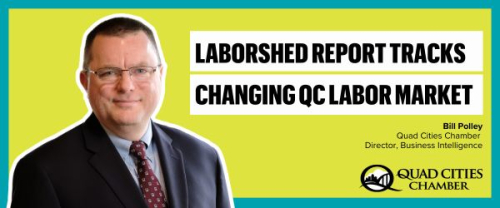
Payroll employment in the Quad Cities is down slightly from a year ago, however the unemployment rate remains low by historical measures. This week, we identify changes in the Quad Cities labor market over the last few years with the help of the latest Laborshed Workforce Report from Iowa Workforce Development.

Weekly Economic Trends and Indicators
October 8, 2024
The U.S. economy added a net 254,000 jobs in September, exceeding nearly everyone's expectations. Gains were broadly shared across most industries. While wages were up slightly, most analysts do not expect this to reignite inflation. This week, we look at the job numbers and consider how to interpret the implications for the path of interest rates.

Weekly Economic Trends and Indicators
October 1, 2024
Recall that our discussion last week revolved around the uncertainty about the size of the cut in the days leading up to the meeting and the fact that many observers were expecting a more conservative ¼ percentage point move. This week, we continue the discussion of the rate cut by specifically thinking about how the pace of rate cuts could affect the outlook both nationally and locally.

Weekly Economic Trends and Indicators
September 24, 2024
Last Wednesday, the Federal Reserve surprised the markets with a 1/2 percentage point decrease in the fed funds target. Many observers expected only a 1/4 percentage point increase. This week, in part one of a two part series on the Fed's policy move, we look at the sequence of events leading up to the decision and why it was a surprise.

Weekly Economic Trends and Indicators
September 17, 2024
Recession or soft landing? The answer depends a great deal on the strength of the consumer. This week we look back at two recessions and a soft landing to see how consumer spending responded in those situations and what that has to tell us about the current outlook.

Weekly Economic Trends and Indicators
September 10, 2024
Payroll jobs grew by about 142,000 in the U.S. in August. How did this compare to expectations, and what does it mean for the economic outlook? Is the U.S. economy still on track for a "soft landing"? This week, we look at the recent labor market numbers and their implications.

Weekly Economic Trends and Indicators
September 3, 2024
Median home prices grew by over 14% in the Quad Cities metro area in the four quarters ending March 2024, and building permits were above the average of the last eight years. While prices are rising, the median home price is still affordable. This week, we look at the drivers of supply and demand in the housing market and how they affect the short-term outlook.

Weekly Economic Trends and Indicators
August 27, 2024
For the last two weeks, we have considered the risk of recession in the U.S. as well as the effect of recent economic developments on the Quad Cities area. This week, we wrap up that series with a discussion of the latest comments from Fed Chair Jerome Powell and why our recent brush with inflation did not end like it did in the '70s.

Weekly Economic Trends and Indicators
August 21, 2024
While the agricultural and manufacturing sectors have experienced a slowdown this year, the strong national economy has provided support for the regional economy. This week, we explain some of the reasons behind the weakness of certain sectors and how they affect the Quad Cities economy. In addition, we look at factors that could swing the pendulum back in the other direction over time and why economic resilience at the national level is so important at the local level.
Category
All Categories |
Workforce & Talent Development |
Legislative Preview |
Government Affairs |
Economic Trends & Indicators |
Economic Development |
Downtowns |
Chamber Members |
Business Resources