


Weekly Economic Trends and Indicators
The Headlines:
U.S. nonfarm business sector productivity increased 0.8% in the first quarter of 2026 according to the Bureau of Labor Statistics (BLS). Compared to the first quarter of 2025, this benchmark productivity index was up 2.9%. The increase of 0.8% was slightly below market expectations of about 1% and was lower than all but two of the last eight quarters.
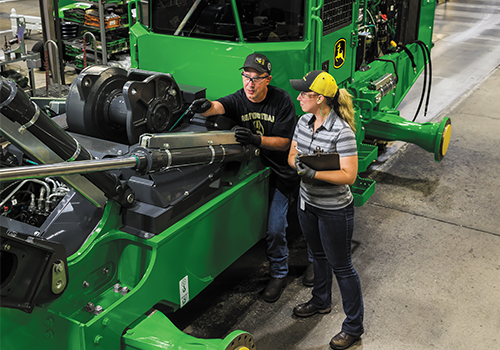
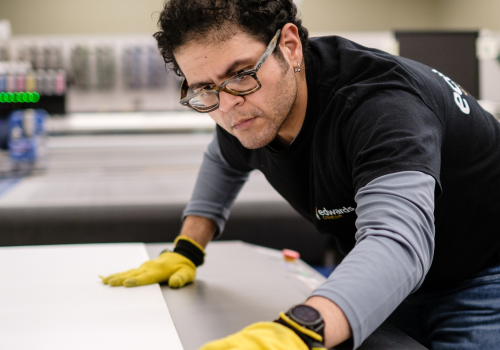
Manufacturing productivity posted its second highest growth in the last eight quarters, as the index grew at a 3.6% rate in the first quarter and the index was 1.7% higher than in the first quarter of 2025.
Nonfinancial corporate productivity for the fourth quarter of 2025 increased by 5.4% and was up 2.9% for the year. This was the highest annual increase in nonfinancial corporate productivity since the 2021 rebound from the COVID-19 recession.
The Details:
Labor productivity is defined as output per hour worked. Mathematically, this means that the rate of output (GDP) growth is equal to the growth of labor hours plus the growth of labor productivity. When productivity is rising, it means that the same GDP growth rate can be supported by fewer hours worked, or alternatively that the same hours worked can support faster GDP growth.
As we have seen in the last two years, job growth has slowed significantly, even as GDP growth has remained quite strong. This has been possible due to faster productivity growth in the last two years compared to the 2010s. In the most recent quarter, hours worked picked up slightly while output growth slowed, leading to somewhat lower (but still positive) productivity growth.
Manufacturing, especially for durable goods, saw a surge in output during the first quarter with stable employment, which is consistent with the strong productivity growth for the quarter.
The Context:
One of the most important questions concerning the economy today is what has been driving the recent increase in productivity growth. More specifically, many are asking to what extent AI has been driving that growth. We know that AI is responsible for some of the increase, but measurement is difficult. AI is impacting firms in very different ways—replacing labor in some instances and enhancing it in others.
Recent research from the Federal Reserve Bank of Kansas City finds that the latest wave of productivity growth has been driven by a small set of industries. As one might expect, information technology and professional, scientific, and technological sectors have seen both high adoption of AI and strong contributions to productivity growth. However, the manufacturing sector’s contribution to productivity growth increased more than any other sector during the period from 2023Q4 to 2025Q2, despite lower-than-average AI adoption.
Thus, we are left with a bit of a puzzle. Are we simply not asking the right questions about the role of AI in manufacturing and consequently underreporting how much AI is contributing, or are the productivity gains in manufacturing due to something else?
These questions matter because strong productivity growth tends to reduce the inflationary pressure of faster GDP growth. Furthermore, we are still in the early stages of AI adoption. If AI is responsible for driving these productivity gains, it would suggest that the economy could grow faster than previously thought.
Next week: Quad Cities labor market update