



2026 Economic Forecast: Cautiously Optimistic
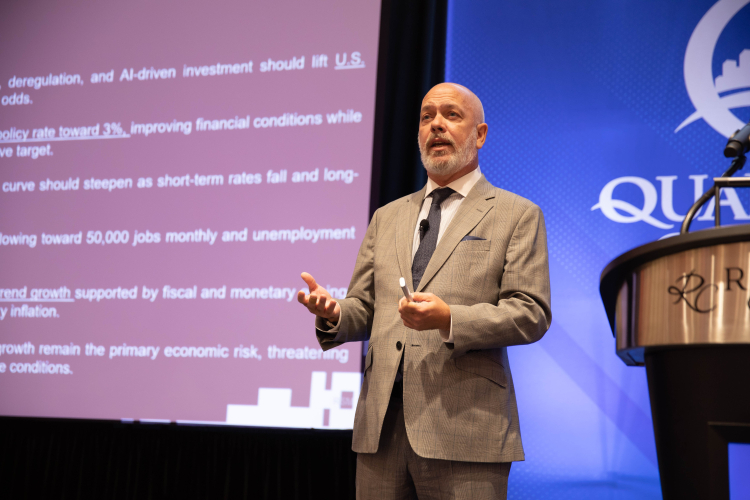
“Overall, the U.S. economy is expected to hold steady going into 2026,” said Kevin Depew, RSM Deputy Chief Economist, who along with Bill Polley, Grow Quad Cities’ Senior Director of Business Intelligence, provided a grounded outlook on growth, inflation, labor markets and the risks that could shape business planning in 2026.
The Chamber hosted its annual Economic Forecast event on Friday, December 5, bringing together business and community leaders to examine national and local trends shaping the year ahead.
Depew noted that he is concerned with the Supreme Court overturning the executive branch’s blanket authorization for tariffs. “If the Supreme Court does decide to overturn the emergency authorization, you’ll start to see upward pressure on rates, which makes the fiscal trajectory a little worse.”
However, Depew further explained that expansionary fiscal policy, anticipated Federal rate cuts, some deregulation and ongoing investment in AI are all expected to help support growth of about 2.2%, keeping recession concerns at bay. The Federal Reserve is also expected to bring its policy rate down toward 3%, which should make borrowing and investing a bit easier, even as inflation stays slightly above 3%.
On the labor side, hiring in the U.S. is expected to slow to around 50,000 jobs per month, and unemployment may drift up toward 4.5% as companies adjust their staffing levels. The baseline forecast gives a 45% chance that the economy grows a little faster than trend next year, helped by easier fiscal and monetary policy. Still, affordability challenges and slower real wage growth remain a big concern for households.
Polley said the factors affecting the Quad Cities region vary a bit from the rest of the country because of the metro area’s ranking as a top exporter in the U.S. (66th out of 380 metro areas). In a recent business survey done for the Grow Quad Cities’ Quarterly Market Report, 61% of respondents said tariffs had a negative effect on their business, with 35% noting that they had altered business decisions this year because of tariffs.
“I think what’s going to happen over the next few months is more of those trade deals are going to start happening. That starts to resolve some of the uncertainty and really helps the firms here in the QC that are so involved in international trade. As long as we don’t have any more disruption, I think that really helps us,” Polley said.