



Weekly Economic Trends and Indicators

Last week, we took a closer look at recent economic events and noted that while the risk of recession is higher than it was a year ago, the U.S. economy remains quite resilient in the face of the evolving risks. This week we ask whether the same is true of the Quad Cities’ economy.
First, note that the single most important factor determining the performance of the local economy is the national economy. Every region of the country has a multitude of connections to every other region. The interconnectedness of various regions causes them to move together and actually improves the overall resilience of the national economy. When other regions of the country are doing well, it helps to increase the demand for the things that our region sells to the rest of the country.
However, differences in resources or the dominant sectors of the economy can cause regions to perform differently, especially if there are unique external shocks to those sectors. A good example of this with which everyone is familiar would be that oil producing regions do better than others when the world price of oil is up.
In our region, both agriculture and manufacturing have experienced a cyclical decline in demand. Recall that corn and soybean prices rose sharply in the post-COVID months and then again with the start of the conflict in Ukraine. This is the reason that from the standpoint of total economic activity (measured by GDP), our region performed better coming out of the COVID recession than many other regions of the country. However, these prices have seen a rapid reversal due to lower demand.
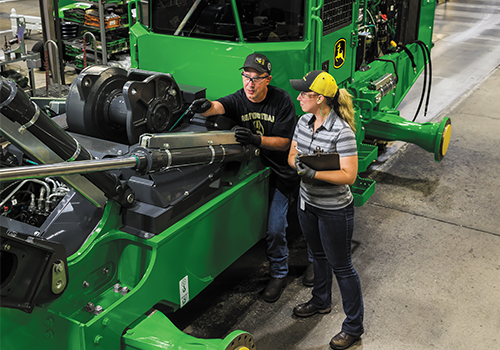
The manufacturing sector is facing a similar situation due to monetary policy. High interest rates to combat the post-COVID inflation have been felt by manufacturers across the country, but because of the concentration of manufacturing here, the economic impact in the Quad Cities is greater than in other regions. The strength of the dollar on the global currency market amplifies this effect on both agriculture and manufacturing as it makes our goods more costly to the world. Again, because the Quad Cities exports a larger share of our output than most other metro areas, the strength of the dollar has a greater impact here.
Is there good news in this scenario? Yes. As we noted last week in the discussion of the yen “carry trade” that caused some temporary turmoil on Wall Street, the reason for the unwinding of the carry trade was higher interest rates in Japan, lower anticipated interest rates in the U.S. (once the Fed starts cutting rates), and a resulting decline in the dollar which helps reverse the effect noted above. If this continues, the normalization of interest rates and foreign exchange rates would help the Quad Cities economy.
Agricultural prices are harder to forecast, but they also have a cyclical nature. Weather conditions and global economic growth matter a great deal, and so does domestic farm policy which could hinge on the upcoming election.
In the meantime, the strength of the national economy, which could still achieve the “soft landing” that avoids a recession, provides support to the local economy. Retail sales remain strong nationwide. The strength of travel and tourism spending are also helping the region. Economic resilience at the national level helps insulate the regional economy from negative shocks specific to the region until the situation improves. With the past as our guide, we know that the effects of such shocks to prices and interest rates eventually subside over time, bringing local economic performance more in line with the U.S. Experience also tells us that the adjustment process presents opportunities for new investment in anticipation of better conditions.
Next week: More on the outlook for interest rate cuts this year