




Weekly Economic Trends and Indicators
The Headlines:
Nonfarm payroll employment in the U.S. increased by 227,000 jobs in November, according to the latest report from the Bureau of Labor Statistics (BLS). In addition, the BLS reported that job growth from the previous two months were revised upward by a combined 56,000 jobs. Over the 12 months ending in November, nonfarm payroll employment increased by an average of 186,000 jobs per month. The national unemployment rate increased from 4.1% in October to 4.2% in November. The report also states that average hourly earnings increased by 13 cents, or 0.4% during November.
Locally, the BLS reported that payroll employment in the Quad Cities metro area was 182,500 in October. This is down 1.0% from the previous October. The unemployment rate in the metro area was 5.4%, unchanged from September.
The Details:
Trends in various sectors of the national labor market were little changed in November. Health care saw the largest gains in employment with 53,600 net new jobs, followed closely by leisure and hospitality with 53,000 net new jobs. Government added 33,000 jobs.
Manufacturing added 22,000 jobs, on the strength of transportation equipment manufacturing which added 32,000 jobs mostly from workers returning to their jobs after being on strike. Durable goods manufacturing other than transportation equipment lost 6,000 jobs.
Temporary help services, which had lost over 265,000 jobs in the last year, stabilized and was essentially unchanged in November.
Locally, manufacturing employed 24,200 in the Quad Cities metro area in October, down by about 1.6% over the last 12-months. This was little changed from September and slightly improved on a year-over-year basis.
The Context:
Overall, this was a very positive report and provides additional evidence of the strength of the U.S. economy. In other news, inflation remains stable. The Consumer Price Index (CPI) was up 0.3% in November after several months of 0.2% increases. Even so, CPI inflation was 2.7% over the last 12 months. Most economists still regard the Fed’s interest rate stance as restrictive, though the recent cuts have made policy much less restrictive compared to earlier this year.
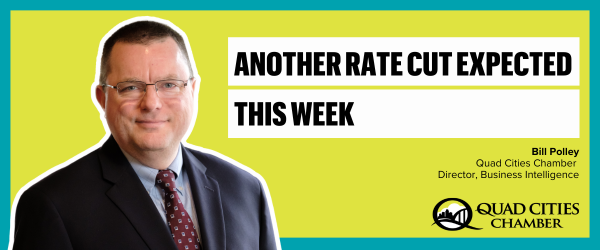
The combination of labor market and inflation reports from the last couple months has helped to consolidate the opinions of many market analysts concerning the path of interest rates in 2025. While a rate cut this week is regarded as almost a sure thing, many expect a pause in January before another possible cut in March. This pace of rate cuts would help support economic growth with minimal risk of re-igniting inflation.
Next week: 2024 in review, part 1