



As noted in the main summary, the Federal Reserve’s interest rate increases have significantly reduced inflation, which peaked at around 9.1 percent (annual rate) in mid-2022, according to the Bureau of Labor Statistics. By the end of the second quarter, the annual rate of inflation had decreased to 3.0 percent.
As the first half of 2023 drew to a close, prices of food and energy had moderated considerably compared to 2022. From June 2022 to June 2023, food prices rose 5.7 percent, which is high, but down from the previous year. Energy prices fell 16.7 percent in the same period.
Shelter prices rose 0.4 percent in June, and the stubbornness of both rental increases and single-family home price increases have been the main contributor to core inflation. However, these price increases are expected to continue to normalize as new construction picks up.
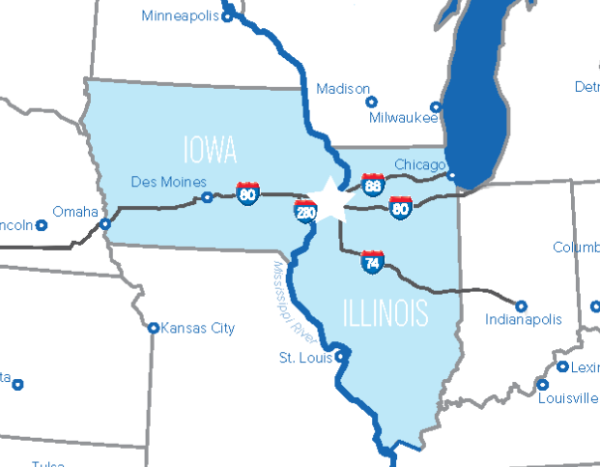
Detailed inflation data is not available for local areas in real-time, however, regional inflation data is reported by the Bureau of Labor Statistics on a monthly basis. The Quad Cities are part of the Midwest region which covers the northern plains and Great Lakes states. In our region, CPI inflation from August 2022 to August 2023 was 3.4 percent, slightly less than at the national rate of 3.7 percent.
For the most part, Midwest inflation tracked closely with national numbers. Our inflation was only slightly higher in a few core components and somewhat lower in food. Shelter costs rose at about the same rate as the national average during the last year. The largest difference, accounting for most of the gap between the regional and national average was in natural gas, where Midwest prices fell 28.6 percent versus a 16.5 percent decrease nationally. During the full calendar year of 2022, Midwest natural gas prices increased 15.4 percent compared to 26.7 percent nationwide. Hence, the first part of 2023 continued to widen the gap between utility prices in the Midwest compared to the rest of the nation. The Quad Cities region continues to be among the lowest cost regions of the country for energy.
Also of note is the fact that the New York Fed indicator of household inflation expectations fell in July from 4.1 percent to 3.8 percent, which is a positive indicator of the Fed’s success in communicating their commitment to lower inflation.