The holidays brought increased airport traffic with passenger count increasing in December as consumers traveled to visit family and friends.
The Paycheck Protection Program (PPP), CARES Act funds and other forms of funding allowed employers to sustain their employees.
Restaurants remained open to indoor dining, curbside service and delivery. They were held to a limited capacity of 50% in Iowa and 25% in Illinois, while practicing social distancing and other COVID-19 protocols. Iowa restaurants brought furloughed workers back and needed additional workers.
Extended stay hotels in Iowa saw increased guests, many coming from outside the area. Contractors, such as fiber optic installers, needed to have long-term stay options.
Drawbacks
The airport still had reduced passenger counts, although they are slightly better than the national average.
Restaurants continued to struggle to find workers to support customers coming back for dining. Some employees were still afraid to be out in public while others were taking advantage of unemployment benefits. Workforce was an issue in this industry prior to COVID-19.
Hotels were running with a very limited staff. The increase in guests was causing more work for the one or two staff members running the day-to-day operations. Hotel revenues were down dramatically, with many hotels dropping from hundreds of employees to under 10.
Retail & Service
Drivers
Retail shops started seeing their revenues increase with the holiday shopping season. Those that offered curbside service and e-commerce were able to see larger profits than those not offering those services. In-person shopping remained at 50% capacity for Iowa and 25% capacity for Illinois.
Iowa grocery stores remained very busy with no restrictions on capacity. Illinois grocery stores also remained busy but were limited to 50% capacity. With the reduction of restaurant hours and limited menu items in both Iowa and Illinois, consumers were cooking at home more which in turn kept the grocery stores busy. The holiday season added additional revenues to both Iowa and Illinois grocery store bottom lines.
Hair salons, nail salons and other personal service providers remained open at 50% capacity in Iowa and 25% capacity in Illinois.
Drawbacks
More online shopping was being done with companies outside the region. Small businesses continued to be impacted by loss of revenue, with some stores closing or laying off workers. Most have been unable to compete with ease of ordering online.
Grocery stores were having a hard time filling positions. Both prior to and during the pandemic, it continues to be difficult to find, hire, train and retain employees, with some being let go for being tardy or absent. Management has been covering more areas and working longer hours, which impacted the level of customer service they can provide.
Salons continued to operate at a reduced capacity, making scheduling clients difficult. Most establishments were still trying to get caught up from being closed for six weeks early in the pandemic. Some stylists worked 12 hour days to accommodate clients. Some services, such as facials, were still not allowed affecting revenue.
Business Services
Drivers
Managed IT service providers remained extremely busy as most employees were working remotely. Revenues in this sector remained strong. Cybersecurity was especially important due to the increase in fraud during this pandemic.
Drawbacks
Managed IT service providers are seeing a lot of companies not equipped to handle cyber-attacks.
The heart of the Midwest
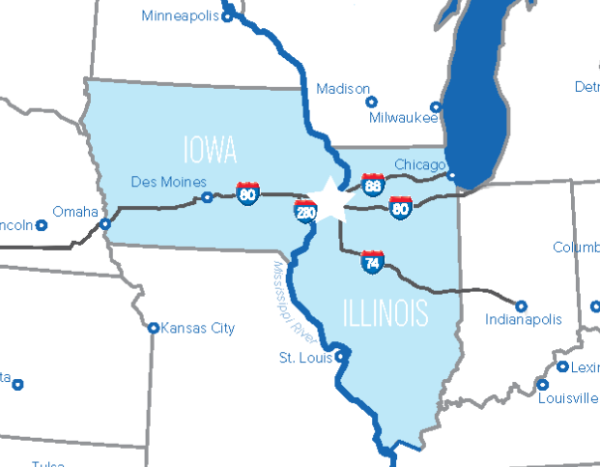
QC, That's Where? It's where two states and one mighty Mississippi River are home to a family of communities making the Midwest's future.