


Chamber members help returning citizens work, grow in Quad Cities

Porshia Brown did her time, but the struggle to regain her life started after prison.
The Davenport woman is juggling being a mother to a 5-month-old and setting up both mixed martial arts fights and weddings at the RiverCenter. A typical day might start at 3 a.m. with breakfast or coffee just to get started.
She doesn't have a car, so she relies on public transportation. But at night, when the buses don't run, she walks.
“We have to do what we have to do,” Brown said.
When Damar Hampton of Davenport went to prison, the Motorola Razr was the hottest new phone and all of his friends had MySpace accounts.
That was over a decade ago, and a lot has changed. Hampton, now out of prison, is trying to catch up as he gets back on his feet.
“It starts with yourself,” he said. “I'm sick and tired of being sick and tired.”
They shared their stories at a recent simulation event at the Department of Corrections halfway house in Davenport. But the human resources managers, area politicians and corrections officers in attendance didn't just hear about their struggles, they got a taste.
Finding skilled employees to fill open jobs remains a top issue among key employers in the Quad Cities region, so some industry, education and nonprofit leaders are turning to underutilized populations, including returning citizens, to fill talent pipelines.
But they can’t do it alone. To build the talent needed for Quad Cities businesses to compete on a global stage, others must follow suit and invest in bold workforce development solutions.
Step forward, step back
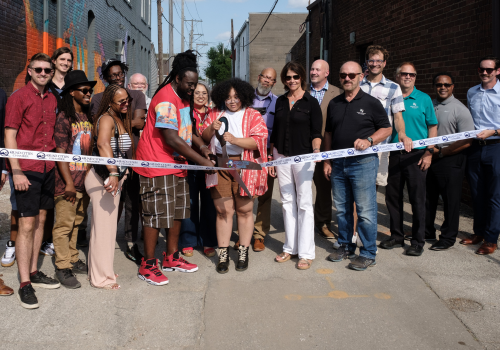
Dozens of community members participated in the interactive simulation designed to demonstrate the first four weeks in the lives of returning citizens as they transition back into society. Stations included job placement, food pantry, urinalysis, plasma donation, parole and probation services, rent assistance and jail.

In an ironic twist, Scott County Major Bryce Schmidt, the jail administrator, wound up behind bars for a failed urinalysis and for being disruptive at a treatment program. The simulation opened his eyes to the lives of the people he serves every day at his job.
“If you start in a hole, it's hard to climb out, especially if you don't have the resources to get there,” Schmidt said. “It's hard to get your footing. When you take a step forward, you take a step back.”
The Safer Foundation, a member of the Quad Cities Chamber, helps people with criminal records navigate the complex web of employment and social services. The nonprofit social impact organization founded in Chicago with an office in the Quad Cities coordinated the simulation with the United Way of Central Iowa.
“We want to raise awareness of the challenges individuals reentering society face,” said Angela Richardson, a program manager at Safer. “They paid their time.”
Participant Trisha Taylor, a human resources manager at Davenport-based Chamber member Sears Seating, didn't have enough money to pay rent and failed every drug test. She was homeless for the first three weeks of the simulation.
“I finally could pay rent the fourth week, but only because I borrowed money from other participants,” Taylor said.
Though the experience was eye-opening, her company already is thinking outside of the (“Have you ever been convicted ...?”) box.
A second chance
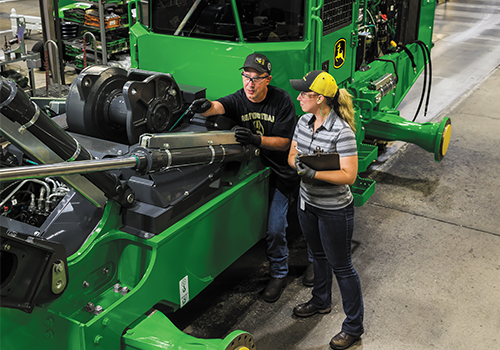
Sears Seating has been working with Safer for years hiring returning citizens.
“We don't have a problem hiring people with questionable backgrounds,” Taylor said. In fact, her company of 550 employees chooses not to do criminal background checks on prospective applicants as a matter of practice.
Founded in 1855 by Issac Howe Sears to produce saddles for horses, the family-owned company at 1718 S. Concord St., Davenport, has grown to become a leading manufacturer of suspension and non-suspension seating for the work vehicle industry. It has facilities and joint ventures in Europe, Asia and South America.
Safer will contact Taylor about potential applicants who may be a good fit for the light assembly work her company does. Sometimes Taylor will see the address for the halfway house, 605 N. Main St., Davenport, on an application and make her own inquiry. She prefers referrals from Safer go through the organization’s grant-funded Advancing Careers and Employment, or ACE, program.
“Yes, people make mistakes,” Taylor said. “We've all made mistakes. But we believe people deserve a second chance.”
Sears Seating gave Brown a chance earlier this year after she spent months looking for a job to no avail. She is grateful for the opportunity.
“I filled out applications, but no one would hire me,” she said. “I got behind on the rent. It's hard to get a job when you're still on (parole).”
Employed, she could pay rent and afford medication for depression and anxiety as well as daycare. The Sears Seating job also helped open other opportunities.
Taylor called Brown a “great employee,” but said that unfortunately layoffs happen from time to time, and Brown was let go after six months due only to her lack of seniority.
“I'm hoping to get her back,” Taylor said of Brown. “She's dependable and hardworking. She would be here if I could find a way to get her here.”
Fellow Chamber member Hahn Ready Mix of Muscatine was recognized in the 2018 Iowa Job Honor Awards for providing employment opportunities for people with criminal convictions and other employment barriers.
The company partners with IowaWORKS and Eastern Iowa Community Colleges to hire newly trained professional drivers to operate their fleet of 100-plus mixer trucks in and around the Quad Cities region.
Transportation an obstacle
Safer's simulation drew attention to transportation challenges for returning citizens.
If necessary, Brown walks to work. Taylor said the nearest bus stop to Sears Seating is at the Rockingham Road Hy-Vee, and she hears complaints from some employees about figuring out how to get to work.
“The transportation in the area is a problem,” Taylor said. “We hire for second and third shift. There are people who don't have reliable transportation. The closest bus stop is on Rockingham, and from here to Hy-Vee is close to a mile. Imagine walking that mile at night, in cold or rainy weather.”
Sears Seating has another location off Iowa Highway 22, far from any bus stop, Taylor added.
She admits driving to work is something she takes for granted, along with having been able to graduate high school and college and pursue a career.
“I knew where I was going to work,” she said. “These are things I just don't even think about.”
In Iowa, transportation is the number one complaint among those reentering society after prison, said Amber Ramirez, who works with incarcerated people as manager of United Way's Central Iowa Returning Citizens Achieve, or CIRCA, program.
Lack of funds only compounds the problem, making every decision a hard one.
“Do you pay rent, or do you buy food?” Ramirez asked.
Typical expenses also include paying down court debt, which on average costs returning citizens $20,000, Ramirez said.
Also, staying at the halfway house isn't free. It costs $18 a day, she said.
About one-third of returning citizens finds themselves back in jail after the first month of release, said Erica Lee, assistant director of Safer's Quad Cities office.
“If you can't get your feet on the ground, either with a job or housing, you're likely to go back,” Lee said.
Making a difference
Major Schmidt wasn't the only one in jail at the conclusion of the simulation. About one-third of the participants, including Davenport Mayor Frank Klipsch, was locked up.
“This was a very enlightening experience,” Klipsch said. “You get some sense of the trouble and difficulties people trying to turn their lives around face.”
People in this crucial phase need support. Safer's work cannot succeed without companies like Sears Seating that are willing to open their doors to people with criminal records.
“I've seen employees who have come out of jail buy their first house after working here a year,” Taylor said. “One is working to get his kids back because he's gainfully employed. And they have better attendance than other employees, almost like they have something to prove.”
Safer works with about 70 employers in the Quad Cities, and this past year the organization served 324 adults throughout the region and 69 youth in Scott County.
“If anyone is reentering society, they need to be directed to an agency providing case management,” she said.
Hampton, a returning citizen who shared his story at the simulation, had the drive, just not the resources and connections to succeed until he found Safer. Through the organization's ACE program, he earned a commercial driver's license and has been driving buses for a year.
“You want better for yourself,” he said.
Brown wants better for herself and her family.
“I want to be better, to be completely done with the system,” she said.
Support from Safer let her know she's not alone.
“Things are so much better for me now,” she said. “I push myself now."
Read more stories about workforce development in the Quad Cities region.